
Chaka Coffee – 22
Hidden in a courtyard off the busy Hayahulet Street, “Hayahulet” meaning “22” just past the bridge on the road to Bole Atlas, Chaka Coffee offers a vibrant oasis in the middle of city life. Dare I say, it’s the most unique and dynamic café I’ve encountered in Addis, complete with three distinct seating areas that reflect the layered personality of the space.
The first seating section greets you immediately as you enter: a lush outdoor area surrounded by live plants and shaded by bamboo roofing. To the right and left, casual seating blends harmoniously with the garden, inviting you to sit longer and more calmly. The second area, located indoors, has a more conventional setting with comfortable seating and walls adorned with local art. The third and perhaps most striking space sits at the back featuring high-top counters, an open food-prep station, and a sleek coffee pressing machine; of course, the orange-hue hang lights and aided by the brown wood, which amplified the overall experience and warmth. The area is split by a walkway anchored by a two striking traditional artifact: the Muqecha.
The “Muqecha” (pronounced with a strong “qe” or “ke” sound) is a beautiful reminder of our coffee heritage. Known by different names in various regions, this traditional grinding tool is typically carved out of tree bark. It consists of two main parts: a bowl-shaped base that holds the coffee beans or spices being ground, and a log-like pestle used to crush the contents with rhythmic strikes. The Muqecha comes in various sizes, from handheld versions used in homes for coffee to large communal ones used for group ceremonies and grinding cereals and spices. Its presence in the café adds an element of authenticity that bridges tradition and modern coffee culture.
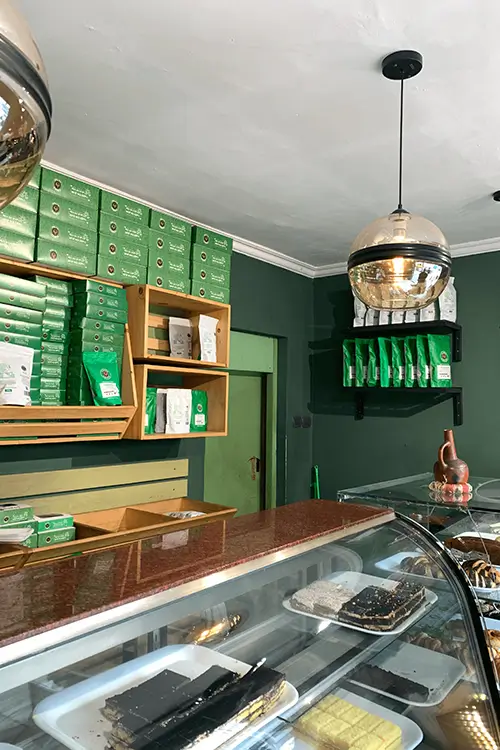
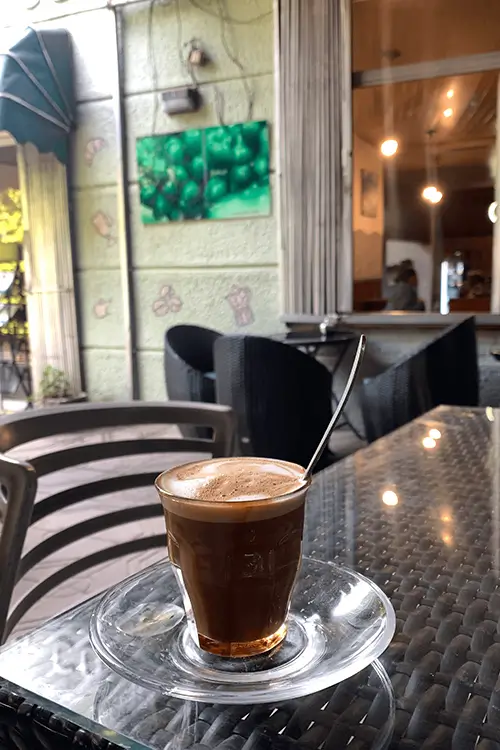
Chaka Coffee’s environment is both expansive and thoughtful: shaded seating areas, indoor lounging, and a full dining experience with a menu that ventures beyond the ordinary. Their branch is known to be like a garden, and the space matches their “Green” brand perfectly.
The other “different” thing I saw was the use of teff, our ancient and native grain, incorporated into breakfast items, pastries, and full meals. The offerings cater to a wide range of tastes from early morning bites to hearty dinner plates.
But of course, the star of the show is the coffee. The name “Chaka,” meaning “wild” or “forest,” is not just poetic! It’s a nod to the coffee’s origin story. The café serves premium Arabica beans, with a fair value for the quality, especially considering that their coffee is also exported internationally.
And if you’re wondering what Arabica coffee is? What does it taste like?
Origins & Growing Regions: Native to the highlands of Ethiopia, Arabica is the original coffee species. It thrives best at altitudes between 3,000 and 6,000 feet, in cool climates with rich volcanic soil and steady rainfall. Ethiopia, Brazil, Colombia, Guatemala, and Kenya are among the top producers.
The Flavor Profile: known for sweet, fruity, and floral notes with bright acidity. Common tasting hints include chocolate, caramel, berries, and wine-like undertones.
Bean Characteristics: Oval-shaped beans with a curved crease. Arabica beans are larger and more delicate than Robusta, and contain less caffeine.
Why It’s Special? Often labeled “100% Arabica” as a hallmark of quality. Used widely in specialty brews and single-origin profiles, Ethiopian varieties like Sidamo and Yirgacheffe are celebrated globally for their distinctive flavors.
I usually go for a dark macchiato, sometimes I even ask for it to be extra dark (for context, macchiato comes in three shades, and the darker, the stronger the taste). However, Chaka’s version was a little too intense even for me, high in acidity and boldly expressive, almost piercing in its flavor (fyi, you know it is hard to explain the taste of coffee without context), but this one didn’t hold back. Their macchiato is priced at 135 ETB, it is expensive, but it’s fair given the ambiance, and the quality if you appreciate that distinct coffee punch!
Also worth noting: Just outside the main café, to the right, there’s a charming pastry shop that’s part of the same establishment. It offers a variety of baked goods, fasting and non-fasting, including a coffee-infused cake that’s a local favorite. Each slice goes for 95 ETB and draws in loyal patrons who know what they’re coming for.
In conclusion, Chaka Coffee is more than a café; it’s a full-bodied coffee and dining experience that marries Ethiopian tradition with modern flair. From the bold logo that greets you at the entrance to the sensory-rich courtyard that feels like a hidden garden, it captures the spirit of wildness that its name implies. Whether you’re sipping a rich macchiato, sampling teff-based pastries, or just taking in the textures and colors of the place, Chaka feels like a retreat, a sanctuary in the intersection of Hayahulet. A wild place to be in the best sense of the word (yes, the pun is intended both for the wild and sanctuary).
Share it on:
Payment Options
- Cash
- Tell Birr
- CBE
- Other Banks
Service
- Coffee
- Breakfast
- Pastry
Working Hours
Monday
7:30 - 8:00
Tuesday
7:30 - 8:00
Wednesday
7:30 - 8:00
Thursday
7:30 - 8:00
Friday
7:30 - 8:00
Saturday
7:30 - 8:00
Sunday
7:30 - 8:00